
What is Womb Cancer?
The womb, which is part of the female reproductive system, plays a key role during pregnancy by protecting and nurturing a growing baby.
Womb cancer, also known as uterine cancer, occurs when cells in the womb (uterus) grow out of control due to DNA mutation. Though it is a severe ailment, there is light at the end of the tunnel: Early detection, along with appropriate and timely treatment, can cure womb cancer.
What Are the Main Types of Womb Cancer?
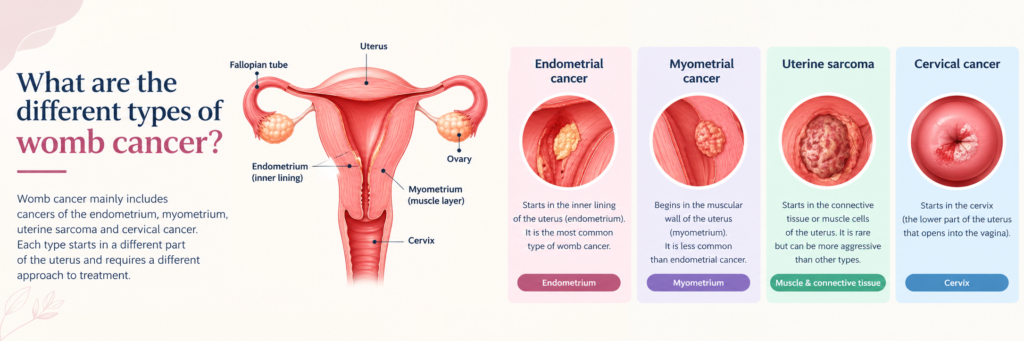
Endometrial cancer and uterine sarcoma are the two main types of womb cancer.
Known to be the most prevalent type of womb cancer, endometrial cancer affects the inner lining of the uterus (endometrium). Its symptoms include abnormal vaginal bleeding, heavy/ irregular menstrual bleeding or pelvic pain.
Obesity, advancing age, and hormonal imbalance are the prime causes of endometrial cancer.
Uterine sarcoma is a rare type of cancer that forms in the muscle or connective tissues of the uterus. According to studies, only 2% to 5% of all uterine cancer patients are diagnosed with uterine sarcoma.
What Are the Less Common Types of Womb Cancer?
The less common types of womb cancer (falling under both endometrial and uterine sarcoma) include:
Serous Carcinoma – prevalent in older women, this type of cancer usually begins in the lining of the fallopian tubes and sometimes in the abdomen.
Clear Cell Uterine Cancer – it is a rare tumour subtype, accounting for less than 5% of all endometrial cancers.
Carcinosarcoma – Also known as MMMT, this rare and highly aggressive cancer exhibits characteristics of both carcinomas and sarcomas.
Leiomyosarcoma – It begins in the smooth muscle wall (myometrium) of the uterus.
How Do the Different Types of Womb Cancer Differ?
The key point of differentiation is in the point of origin within the organ and how the cells behave.
Endometrial cancer, which is the most common category of womb cancers, starts in the lining of the womb (endometrium).
Uterine sarcoma includes the class of womb cancers that originate in the muscle wall of the womb (myometrium) or supporting tissues.
How Is Womb Cancer Diagnosed and Treated?
Womb cancer, especially endometrial cancer, is diagnosed through different tests and diagnostic protocols that include pelvic exams, transvaginal ultrasound, endometrial biopsy, imaging, and hysteroscopy.
Hysterectomy, which includes removal of the uterus and cervix, is the main invasive procedure for treating endometrial cancer. A gynaecologic oncologist in Dadar, Mumbai, can assess the condition and recommend the most appropriate treatment approach. Additional remedies may include radiation therapy, chemotherapy, and hormone therapy.
Total hysterectomy, bilateral salpingo-oophorectomy, lymph node removal, and minimally invasive surgery are the treatment options for uterine sarcoma. Additionally, radiation therapy and chemotherapy may also be advised depending on the patient’s medical condition.
FAQs
Is womb cancer the same as uterine cancer?
Yes, both refer to the same disease. Actually, it’s a matter of convention; the healthcare fraternity in the United States and many other geographical regions of the world use the term ‘uterine cancer’, while medical professionals in the United Kingdom mostly use the term ‘womb cancer’.
What is the most common type of womb cancer?
Endometrial cancer, accounting for about 90% of all reported cases, is the most common type of womb cancer.
What is the difference between endometrial cancer and uterine cancer?
As a matter of convenience, common people as well as healthcare professionals interchangeably use endometrial cancer and uterine cancer to refer to the same disease. However, from a technical viewpoint, endometrial cancer is a particular type of uterine cancer. Since it is the most common type of womb cancer, people often use the term uterine cancer to imply endometrial cancer.
Who is at a higher risk of developing womb cancer?
Higher and prolonged exposure to estrogen is the main cause of womb cancer. Women with advanced age, obesity, late menopause, and early menstruation are more susceptible to getting affected by womb cancer.
What are the early symptoms of womb cancer?
Abnormal vaginal bleeding, which comprises postmenopausal bleeding, excessive menstrual bleeding, and bleeding or spotting between periods, is an early symptom of womb cancer. Furthermore, vaginal discharge without blood, pelvic pain, pain while urinating, and pain during intercourse are also warning signs of womb cancer.
Can womb cancer be treated successfully if detected early?
Yes, indeed. Cure rates are quite high if the cancer is detected in its early stage, i.e. while it is still confined to the uterus.


