
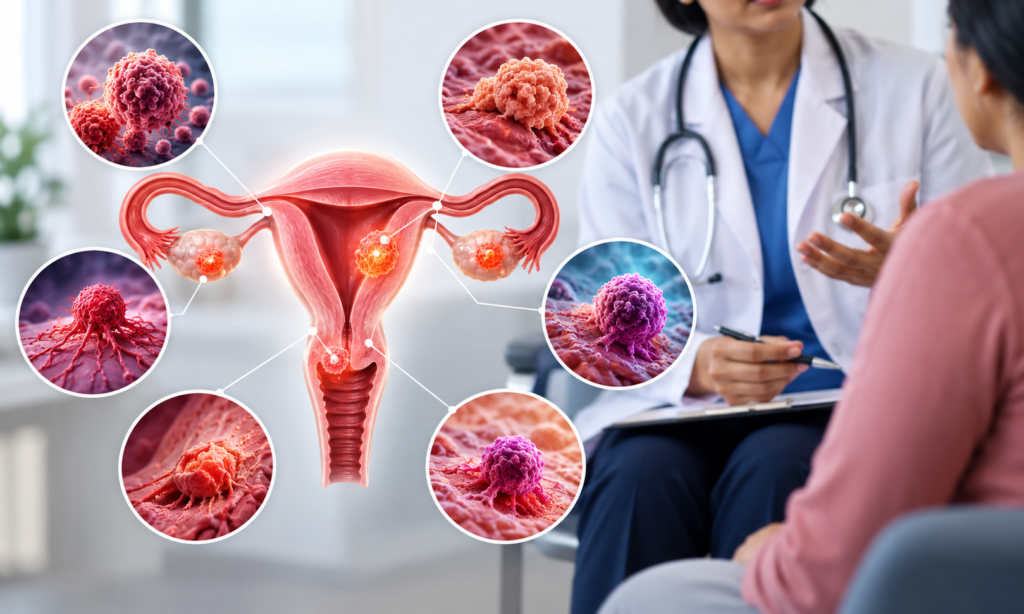
What Is a Gynaecologic Oncologist?
A Gynaecologic Oncologist is a doctor who specializes in diagnosing and treating cancers of the female reproductive tract.
The female reproductive system is a complex, intricate network of organs (internal and external) that work together to support motherhood, starting right from conception and pregnancy to eventually ending in childbirth. Any part of this system, including the ovaries, fallopian tubes, vulva, etc., can be affected by cancers Such cancers are called gynaecologic cancers. Gynaecologic Oncologists are qualified healthcare practitioners who help patients overcome the suffering and trauma associated with a gynaecologic cancer.
What Types of Cancer Does a Gynaecologic Oncologist Treat?
A Gynaecologic Oncologist diagnoses and treats the following types of cancer:
Ovarian Cancer – Every woman has two ovaries, one each located on either side of the uterus. These small, oval shaped organs are responsible for producing the eggs that are essential for conception. Ovaries also produce hormones such as estrogen and progesterone.
Caused by genetic mutations, ovarian cancer occurs when there is an overgrowth of abnormal cells in the ovarian tissue. Being an asymptomatic disease, it is usually difficult to detect in the early stages.
Symptoms of ovarian cancer typically include pelvic, back, or abdominal pain, bloating, loss of appetite, fatigue, and pain during intercourse.
Doctors use tests such as pelvic ultrasound, imaging (MRIs, CT scans, and PET scans), the CA-125 blood test, and biopsies to detect ovarian cancer and its specific stage.
Depending on the particular type of ovarian cancer (Epithelial, Germ Cells or Stromal Cells) and its current stage, healthcare professionals may opt for surgery, chemotherapy, immunotherapy or hormone therapy to treat it.
Uterine Cancer – The uterine is that organ within the female reproductive system where the fetus develops during pregnancy.
Also called endometrial cancer, uterine cancer starts with uncontrolled growth of cells in the inner lining of the uterus. Mutated cells grow and amplify uncontrollably in number, which can form a mass called a tumor. Since abnormal vaginal bleeding is a key indicator, uterine cancer is easier to detect in its primary stage.
Symptoms of uterine cancer include pelvic pain and abnormal vaginal bleeding, including irregular menstrual bleeding, post-menopausal bleeding or spotting between periods.
Doctors resort to different diagnostic approaches to detect uterine cancer, including pelvic examination, CA-125 assay, transvaginal ultrasound, hysterectomy, and endometrial biopsy.
Most patients diagnosed with uterine cancer need surgery. Doctors often perform minimally invasive surgery, though open surgery may be needed in some cases. They usually perform hysterectomy, which is surgical removal of the uterus.
Depending on the grade and stage of the cancer, the doctor may advise supportive post-op treatments such as chemotherapy and radiotherapy.
Cervical Cancer – Affecting the lower part of the uterus, which is called the cervix, cervical cancer is usually caused by HPV infection, which is transmitted through sexual contact.
Initially, cervical cancer is asymptomatic. However, as it progresses, patients may notice various warning signs, including heavier menstrual bleeding, post-intercourse bleeding, and pelvic pain.
Screening tests, including Pap smear and HPV DNA test, can help detect cervical cancer. If these test results come back positive, your doctor may advise a colposcopy for further investigation.
Treatment of cervical cancer essentially depends on a number of parameters; these include age, health condition, cancer stage, etc. Medication, such as targeted therapy, can be used to treat the disease.
Other remedial protocols are surgery, chemotherapy, and immunotherapy.
Vaginal Cancer – Forming in the inner lining of the vagina, vaginal cancer is the rarest type of tumour afflicting the female reproductive system. Since this type of malignancy is slow-growing, it can be detected and treated before it becomes unmanageable.
Pain during intercourse as well as vaginal bleeding after sex and vaginal bleeding after menopause are the main symptoms of vaginal cancer. Pelvic exam, Pap smear, and HPV DNA, followed perhaps by a colposcopy and biopsy, are the diagnostic modalities usually done to diagnose cervical cancer.
Radiation, chemotherapy, and/or surgery including (vaginectomy and pelvic exenteration) are the treatment options for treating vaginal cancer. The procedure to be adopted is decided by the doctor after examining several relevant factors, including the patient’s age, cancer stage, and their willingness to have biological children.
When Should You See a Gynaecologic Oncologist?
Schedule a consultation with a reputed, experienced Gynaecologic Oncologist immediately after you have a confirmed diagnosis of ovarian, uterine, cervical, or vaginal cancer.
You may also visit a Gynaecologic Oncologist’s clinic when you think you are highly susceptible to the disease i.e. when you experience symptoms such as excessive or abnormal vaginal bleeding, abdominal pain, pelvic pain, etc. However, it is not advisable to walk up to a Gynaecologic Oncologist’s doorstep unless earlier examined and referred to by a general gynaecologist.
Why Does Specialized Care Matter for Gynaecologic Cancers?
A Gynaecologic Oncologist brings extra knowledge and training over and above a regular gynaecologist. They have the advanced expertise to perform complex pelvic surgeries and remove hard-to-access tumours that are located in the close vicinity of vital organs, such as the bowel and bladder. Also, they adopt an integrated approach, including surgery, medication, pain management, and requisite supportive care.
FAQs
What is the difference between a gynaecologist and a gynaecologic oncologist?
A gynaecologist is a generalist who focuses on the routine care of the female reproductive system whereas a gynaecologic oncologist is a specialist who treats cancers affecting the female reproductive organs.
Which cancers are considered gynaecologic cancers?
Ovarian, uterine, cervical, and vaginal cancers are considered gynaecologic cancers.
Do I need a referral to see a gynaecologic oncologist?
Yes, you usually need a referral from a general gynaecologist to visit a gynaecologic oncologist.
Can a gynaecologic oncologist perform surgery and chemotherapy?
Yes, certainly.
What are the early signs of gynaecologic cancers?
Abnormal vaginal bleeding, either after intercourse or post-menopausal, spotting between periods, pelvic pain, and abdominal pain are usually the early signs of gynaecologic cancers.
Does every ovarian cyst or uterine lump require a gynaecologic oncologist?
No, it does not.


